3001 S Galapago St, Englewood, CO 80110

720-784-7201

Learn why posts, gates, fasteners, and installation quality play such a big role in how well your fence holds up over time.
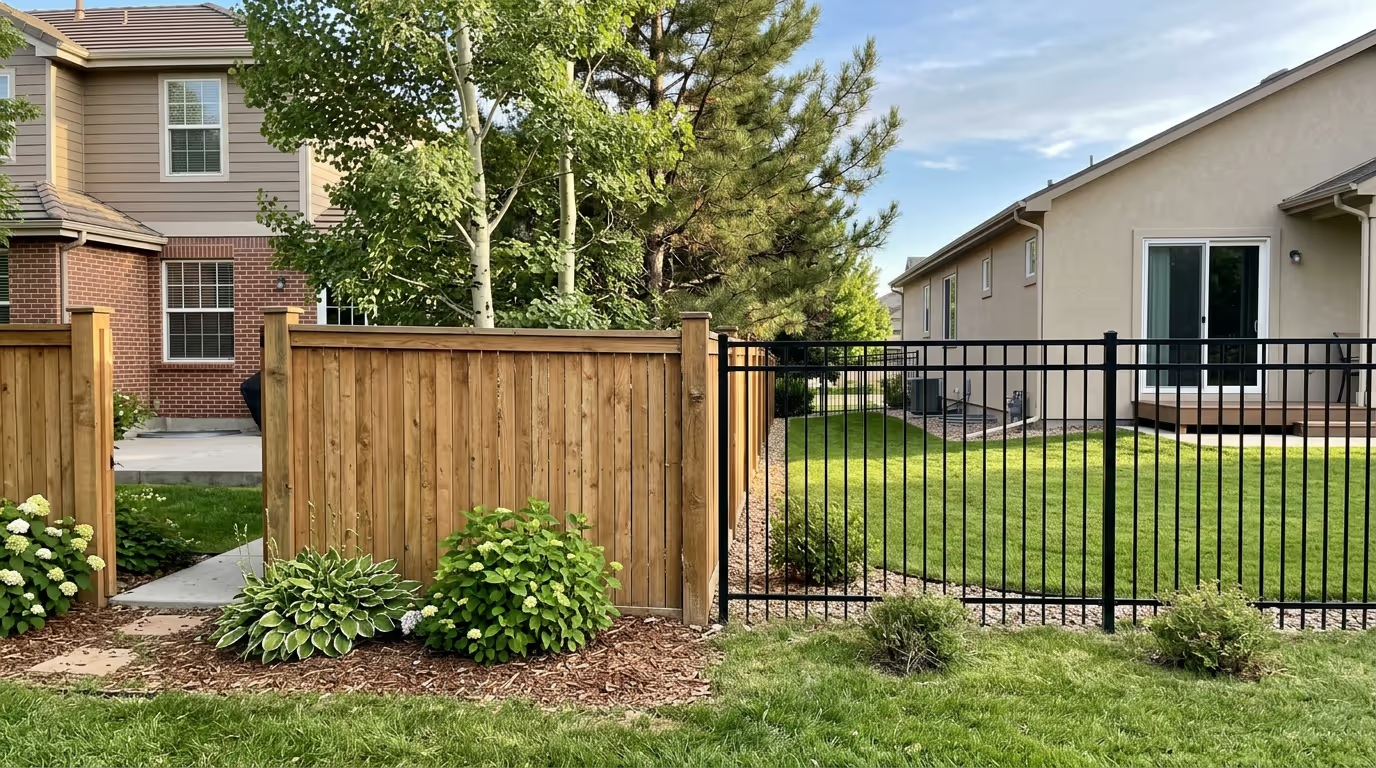
Most homeowners notice the look of a fence first. They see the color, the style, the height, and how well it fits the home. That part matters. A fence should look good in the yard and feel like a natural part of the property. Still, the real reason one fence lasts longer than another usually has less to do with the style you see from the street and more to do with the parts and workmanship behind it.
A long-lasting fence depends on structure, hardware, and installation quality. It depends on whether the posts are strong enough, whether the gate is built to handle daily use, whether the fasteners can hold up over time, and whether the crew took the time to install everything the right way. Those details may not be the first thing a homeowner asks about, though they often decide whether a fence still feels solid years later.
If you are comparing fence options for your Denver area home, here is what really makes a fence last longer. That question comes up often for homeowners across the region, including places like Broomfield and Lone Tree, where long-term performance matters just as much as curb appeal.
If you want to understand why one fence ages well and another starts leaning, wobbling, or failing early, start with the posts. Posts are the backbone of the entire fence. They carry the weight, support the line, and help each section stay stable over time.
When posts are weak, poorly set, or chosen without long-term performance in mind, the whole fence becomes more vulnerable. You may notice leaning panels, loose sections, or movement that gets worse over time. The fence might still look acceptable for a while, though it no longer feels as strong as it should.
This is why better fence companies talk so much about structure. Fence Experts, for example, puts strong emphasis on heavier-duty post choices and avoiding builder-grade shortcuts. That matters because a fence can only be as reliable as the foundation holding it up.
For homeowners, the practical takeaway is simple. If you want a fence that stays straighter, feels stronger, and holds up longer, ask how the posts are being handled. A fence with a great-looking finish and weak structure underneath is still a weak fence.
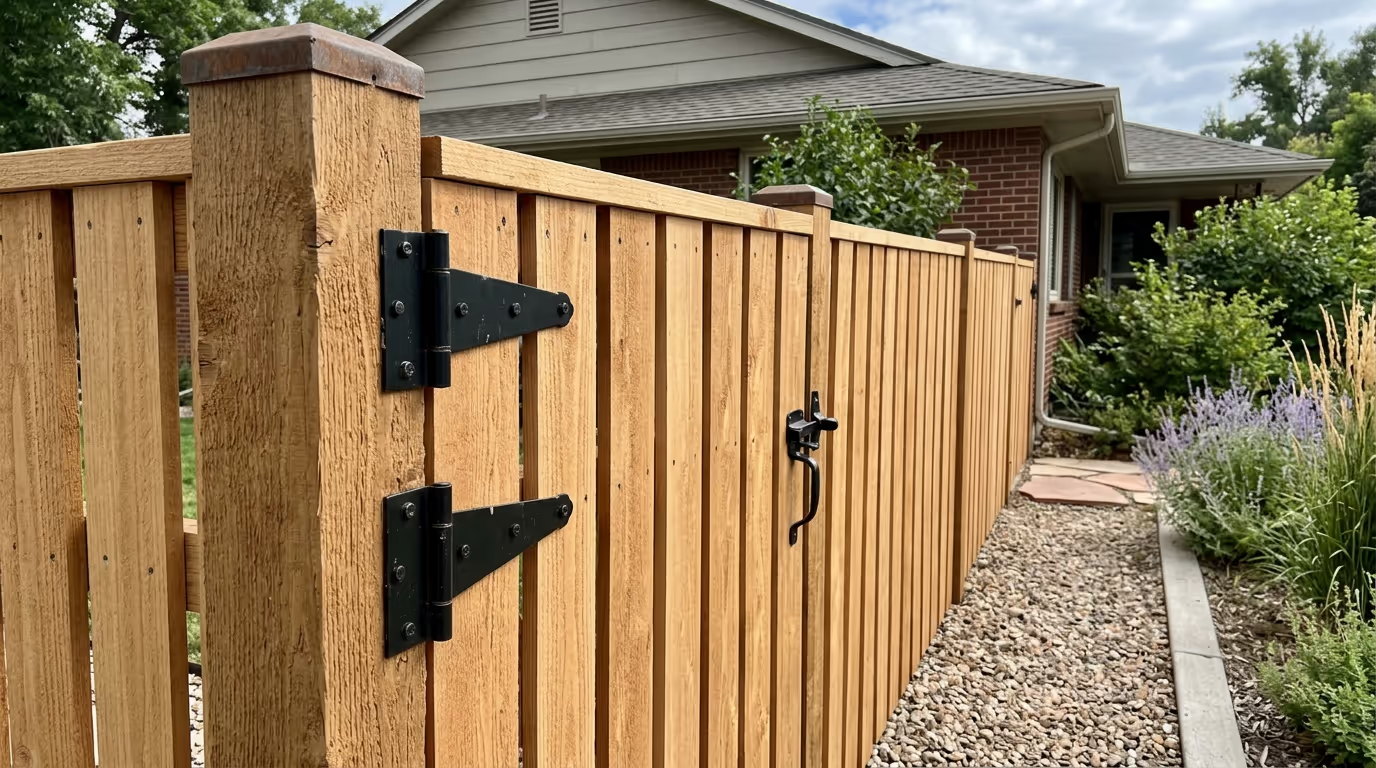
Gates do more work than almost any other part of a fence. They open and close again and again, carry repeated pressure on the frame and hinges, and need to keep working smoothly through everyday use. That is why gates are often the first place where poor workmanship starts to show.
A well-built gate should feel solid. It should swing properly, latch cleanly, and stay aligned without needing constant adjustment. A weak gate often tells a different story. It may sag, drag, shift, or stop lining up the way it should. That is rarely just a hardware problem. In many cases, it points to issues in the frame, post support, or the way the gate was installed in the first place.
Fence Experts calls out structurally reinforced gates as part of what makes its fences stronger. That is a smart thing for homeowners to pay attention to. Gates are where daily life puts a fence to the test. If the gate is not built well, the rest of the fence usually is not far behind. That matters whether the project is a privacy fence, a vinyl fence, or a composite fence.
Fasteners are easy to overlook. They are small, and they usually are not the main thing a homeowner notices during a walk-through. Still, they play a major role in how well a fence holds together over time.
Nails, screws, brackets, and hardware do the quiet work of keeping parts in place. When low-quality fasteners are used, problems can build slowly. Boards may loosen. Hardware may corrode. Gates may start to shift. Sections may no longer feel tight and secure. What seems like a tiny material choice at the start can affect the whole fence later on.
This is one reason the project brief puts focus on premium stainless steel nails that will not bleed or rust. That detail supports both appearance and long-term performance. Homeowners may not ask about fasteners first, though they often notice the result when a fence still looks clean and feels solid years after installation.
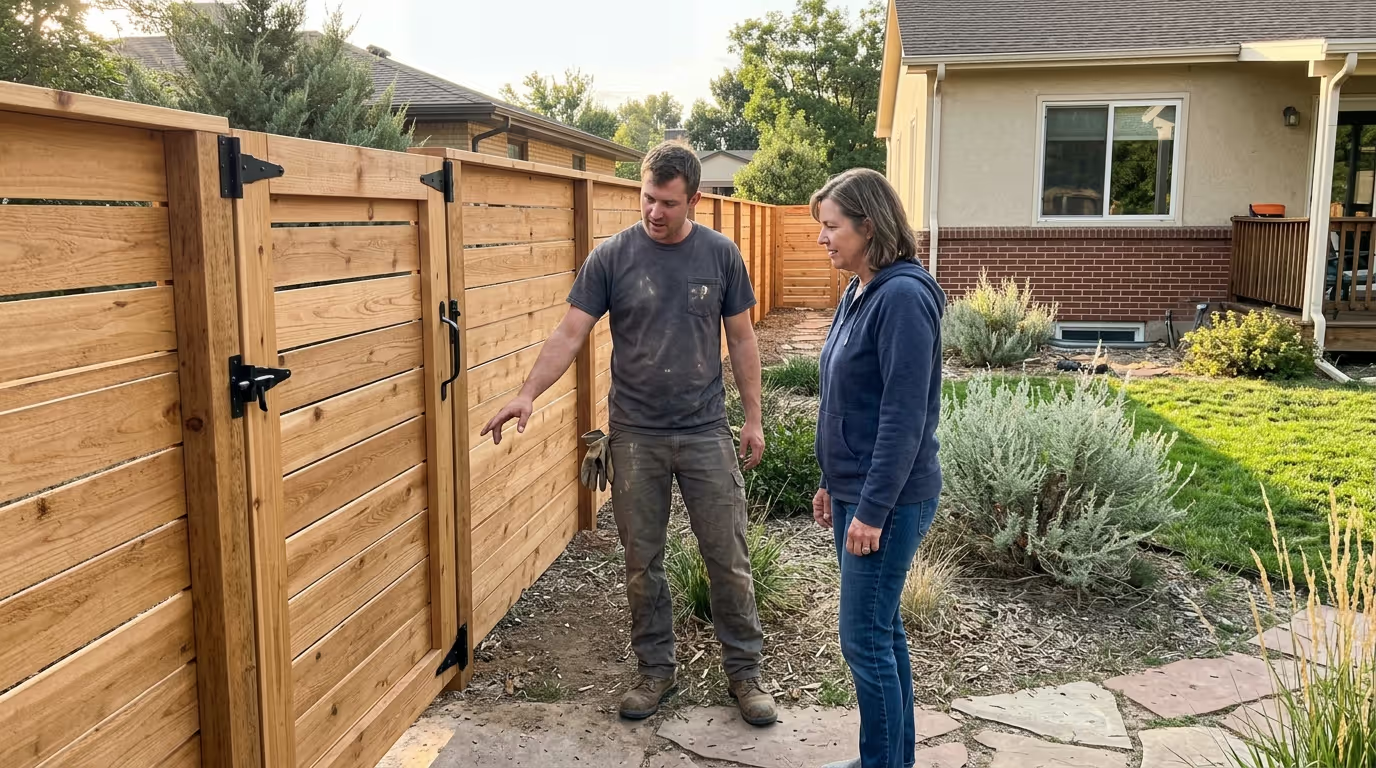
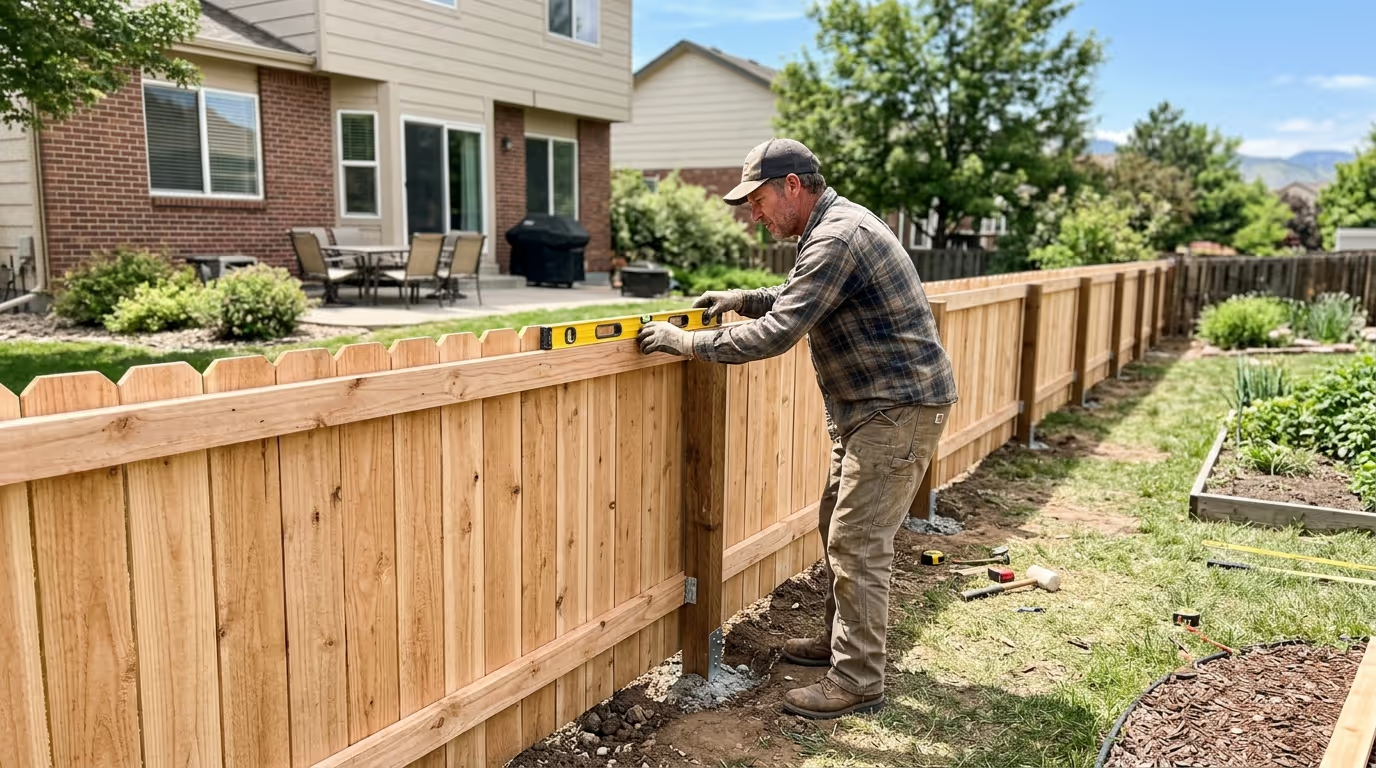
Even great materials can only do so much if the installation is rushed. A fence is not a product that arrives fully finished and perfect on its own. It has to be built on-site, piece by piece, by people who know what they are doing and care enough to do it well.
Good installation shows up in straight lines, solid support, clean spacing, stable gates, careful alignment, and a finished result that feels dependable. Poor installation often shows up more slowly. You may start noticing movement, uneven sections, loose boards, or little flaws that become bigger issues over time.
That is why workmanship matters so much. Fence Experts talks about installers with 10 plus years of experience, slowing down where it matters, and refusing to cut corners. That is not just brand language. It points to a real truth in fencing. The same materials can perform very differently depending on who installs them and how seriously they take the work. If you want to understand how the company frames that standard, the Why Us page is a good place to start.
When homeowners hear phrases like “no cut corners,” it can sound like standard sales talk. In fencing, it is much more practical than that. Shortcuts usually show up in the parts of the job that a homeowner may not notice right away. Posts may not be as strong as they should be. Gates may not be reinforced properly. Hardware may be cheaper than it should be. The layout may be rushed. The finishing details may be good enough for today, but not built for long-term performance.
Those shortcuts can save time in the moment. They usually do not save money in the long run. The fence may age faster, need more repairs, or stop feeling dependable much sooner than expected.
A better fence company thinks beyond installation day. It asks what this fence will feel like after years of wind, use, weather, and daily life. That is the mindset behind stronger standards and more careful workmanship. It is also why long-term value often comes from the unseen choices, not just the visible ones.
Colorado homeowners have another factor to think about: climate. Outdoor structures do not live in a controlled indoor setting. They deal with sun, temperature shifts, moisture, wind, and everyday exposure. That means a fence that is only “good enough” at the start can show its weaknesses faster than expected.
The brief for this site makes a point of saying local climate matters and that Fence Experts builds with Colorado conditions in mind. That matters in a blog topic like this because durability is not just about the material name. It is about whether the full fence system is set up to handle real outdoor conditions over time.
In other words, a long-lasting fence is not only a style decision. It is a performance decision. The stronger the structure and workmanship, the better chance the fence has of holding up well in a real Colorado yard. That is just as true in Longmont and Castle Rock as it is anywhere else nearby.
Homeowners often compare fences by asking which material lasts longer. That is a fair question, though it is not the whole story. Material matters, though so does the build quality behind it. A fence made from a lower-maintenance material can still disappoint if the posts are weak or the installation is rushed. A more traditional material can still perform well if it is built with care and stronger standards.
This is why some fences seem to age gracefully while others start looking tired much sooner. The better fence usually had more going for it from the start: stronger support, better gate construction, better fasteners, careful layout, and an installer who treated the work like something that needed to hold up for years, not just pass a quick first impression.
If you want a fence that lasts longer, the best questions are not only about style and price. It helps to ask about the parts that shape long-term performance.
These questions help shift the conversation away from the cheapest fast answer and toward the quality of the finished fence. That is usually where the real value lives.
One of the best ways to judge fence quality is to think beyond day one. A brand-new fence almost always looks decent from a distance. The real question is how it will feel after the first season, after repeated use of the gate, after changes in weather, and after daily life has had time to test it.
A well-built fence should still feel stable. The lines should still look clean. The gate should still work properly. The structure should still inspire confidence, not make you wonder what will need fixing next.
That is where workmanship earns its value. It creates a fence that is not only attractive at the start, but dependable over time.
Many homeowners think fence life starts after the crew leaves. In reality, the lifespan of a fence starts being shaped on installation day. The choices made at that point, from post strength to gate framing to fastener quality to the care of the install, set the tone for what happens next.
If the structure is strong, the hardware is reliable, and the workmanship is careful, the fence has a much better chance of aging well. If those pieces are weak, no finish or style can fully hide that forever.
That is why posts, gates, fasteners, and installation quality play such a big role in how long a fence lasts. They are the parts that turn a fence from a simple boundary into something you can count on.
A long-lasting fence is rarely the result of one magic material or one sales feature. It comes from a series of smart choices made early: stronger posts, reinforced gates, better fasteners, experienced installers, and a crew that cares about doing the job right. Those things may not always be the most visible parts of the project, though they are often the most important.
If you are planning a new fence for your Denver area home, it is worth looking past the surface and asking what is really supporting the build. A fence that lasts longer is usually a fence that was built better from the start. If you want to compare options further, explore our services, including steel fence, chain link fence, and other fence styles built for long-term performance.