3001 S Galapago St, Englewood, CO 80110

720-784-7201

Learn which fence problems should be fixed sooner rather than later so small issues do not turn into bigger repair costs, lost privacy, or full replacement.
Fence issues often start in ways that feel easy to ignore. A gate drags a little. One post feels slightly loose. A few boards begin to pull away. A section looks a little crooked, though the fence still seems to be standing well enough. Many homeowners look at those problems and think the same thing: it can wait.
Sometimes that is true for a short time. But fencing problems usually do not stay frozen where they started. A small weak point puts pressure on the next one. A loose section starts shifting more. A gate that drags stresses the post and hardware around it. Moisture gets into one damaged area and begins affecting the parts beside it. Before long, what could have been a manageable repair becomes a bigger project with a higher price tag and more disruption.
If you want to protect your privacy, maintain curb appeal, and avoid pushing a fence into early replacement, it helps to know which repairs are worth handling sooner rather than later. For Denver area homeowners, that matters even more because outdoor structures deal with regular sun, temperature swings, and daily use year-round. Homeowners in places like Thornton and Westminster often run into the same issue: small fence problems feel easy to delay until they suddenly are not.
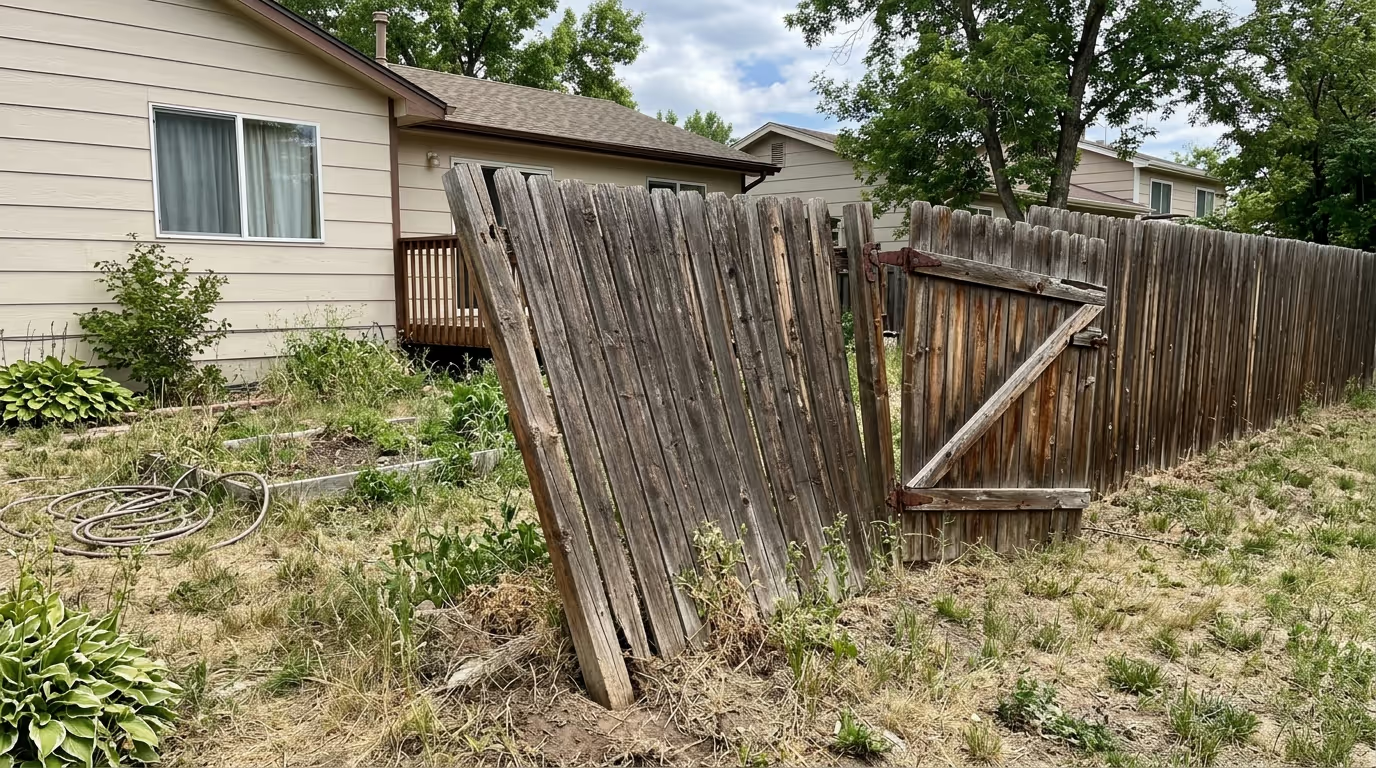
One of the clearest fence problems to take seriously is leaning. If a section of fence is no longer straight, something underneath is usually no longer doing its job properly. That could mean a weak post, shifting support, or a structural issue that is spreading through the fence line.
Leaning is more than a cosmetic problem. A section that is out of line puts stress on adjoining panels, hardware, and posts. It can reduce privacy, make the fence feel less secure, and create a chain reaction if left alone for too long. The more movement the fence has, the harder it becomes to keep the surrounding sections stable.
Homeowners sometimes wait because the fence is “still standing.” The problem is that a leaning fence is already telling you stability has started to change. If the issue is caught early, repair may still be realistic. If it keeps spreading, replacement can become the more likely outcome.
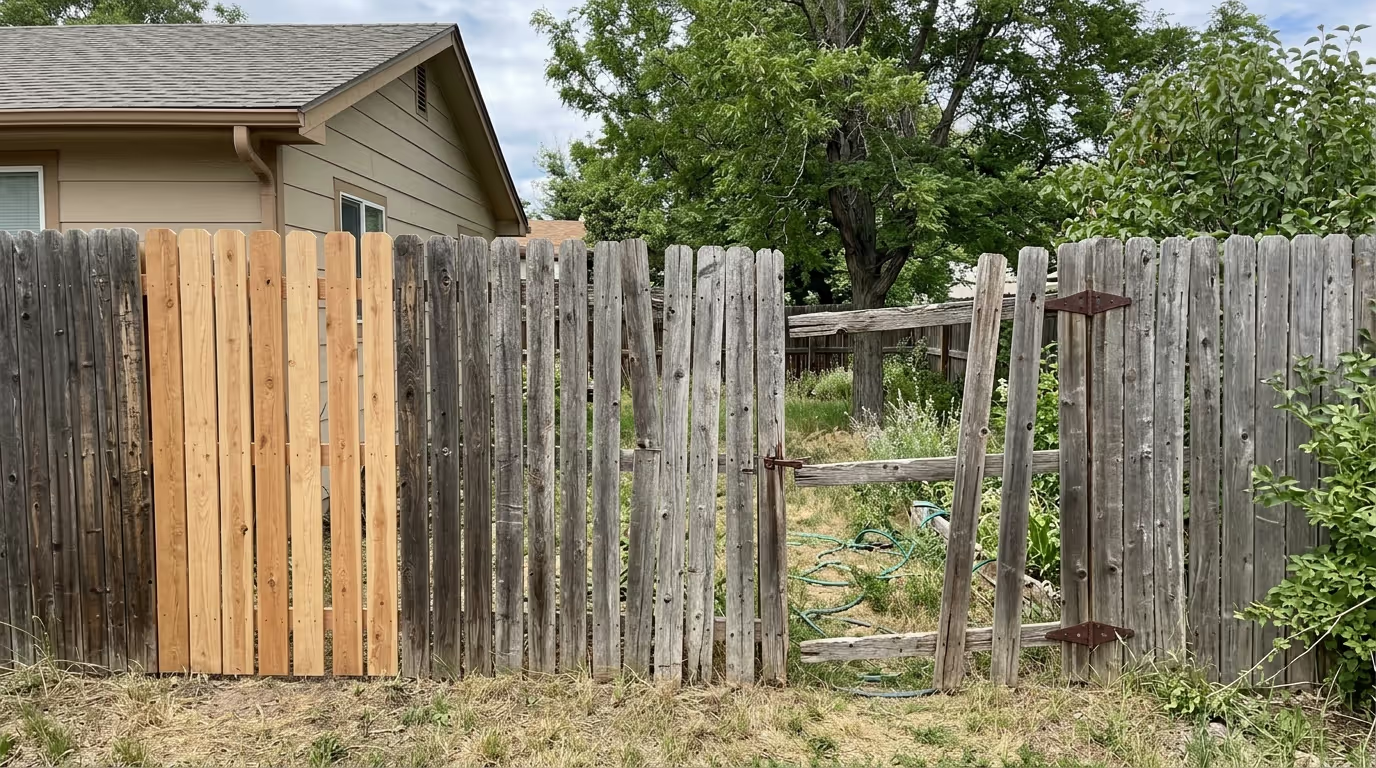
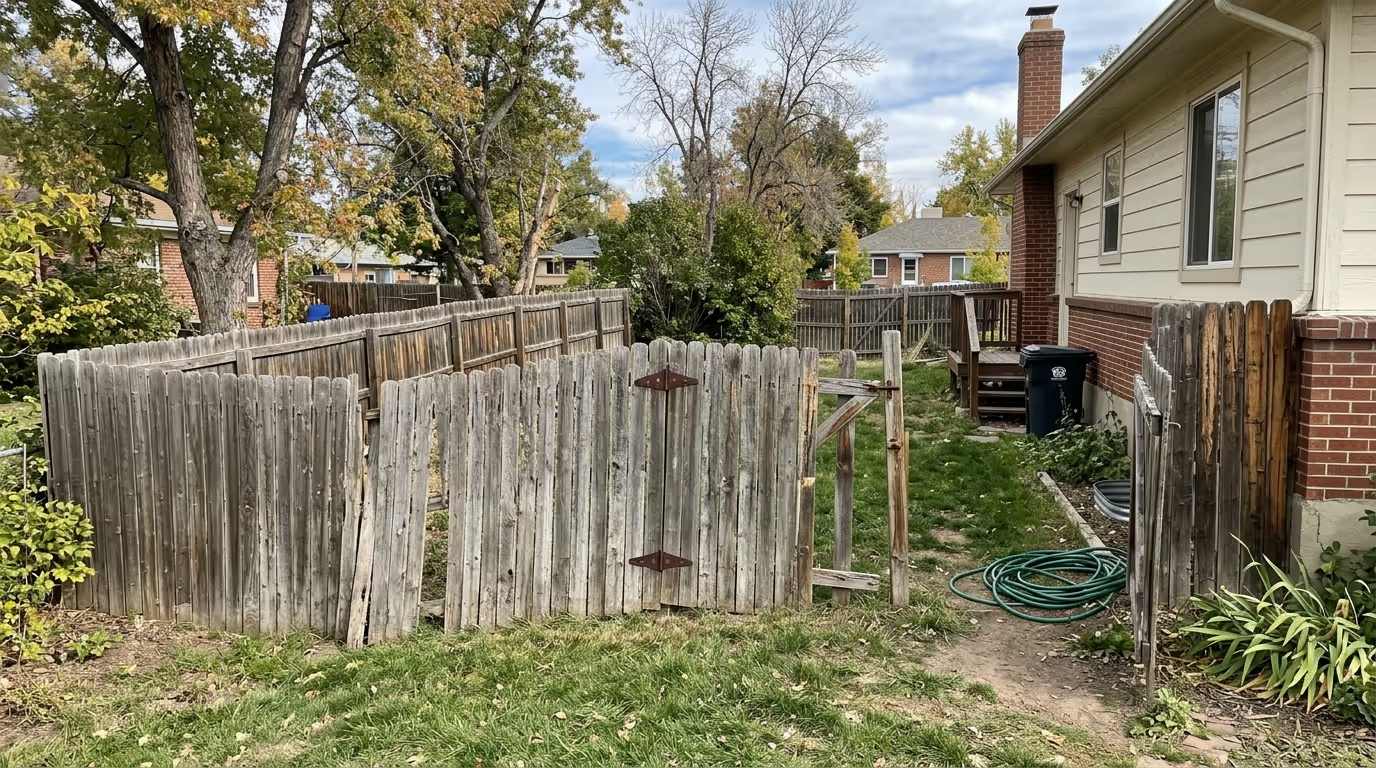
Gates are one of the hardest-working parts of any fence. They open and close constantly, take pressure on the hinges and frame, and usually show early signs of stress before the rest of the fence does. That is why a gate that drags, sags, or stops latching properly should not be treated as a minor annoyance.
Sometimes the fix is limited to hardware. In other cases, the gate issue points to something deeper, like movement in the supporting posts or weakness in the frame itself. If the gate is already out of line, forcing it open and shut every day usually makes things worse. It adds more strain to parts that may already be compromised.
A well-built fence depends heavily on a strong gate setup. That is one reason strong builds and reinforced gates matter so much, whether the project is a privacy fence, vinyl fence, or composite fence.
If a post moves when touched, or if you can feel that a section of fence is no longer firmly supported, that repair should not sit on the back burner. Posts are the backbone of the fence. They hold the structure in place, support alignment, and help the whole fence stay dependable over time.
Once a post starts failing, the rest of the fence usually has to compensate for that weakness. Panels can begin pulling, gates can stop working properly, and the fence line can start looking less stable overall. A loose post is rarely the kind of issue that improves with time. It is usually the kind that becomes more expensive when it is left untreated.
This is also one reason strong post choices matter so much. Fence Experts emphasizes heavier-duty post construction and avoiding builder-grade shortcuts because long-term stability starts there. You can see more of that approach on the Why Us page.
A single damaged board does not always mean the whole fence is in trouble. But homeowners should be careful about assuming broken boards are only cosmetic. Fence panels work together as a system. When one part begins to separate, pull away, split, or sag, it can affect how the surrounding parts carry load and hold their line.
That matters even more on privacy fences, where gaps and movement can quickly change both appearance and function. A small panel issue may start as an eyesore, but it can also become the place where weather exposure, moisture, and ongoing movement start spreading more damage through the section.
If the damage is isolated, a prompt repair may save you from a larger problem. If the same kind of breakdown is showing up in many places, that is when homeowners should start asking whether the fence is aging out as a whole.
Fence hardware does a lot of quiet work. Hinges, brackets, fasteners, and latches help keep the fence stable and usable every day. When those parts start rusting, loosening, or failing, it is easy to focus on the most visible inconvenience and miss the bigger picture. A latch that no longer closes cleanly may seem minor. A rusty hinge may seem like something to watch later. But hardware problems often affect both function and structure over time.
Homeowners should think about these smaller details the same way a good installer does. Fasteners and hardware are not filler parts. When they begin to weaken, the rest of the fence can start feeling less secure too.
Prompt repairs in this area can keep a more limited problem from turning into gate failure, panel movement, or wider instability.
For wood fencing in particular, visible rot is one of the most important issues to address early. Soft spots, cracking near the base, darkened areas, swelling, or sections that feel weak can all point to moisture damage that is already affecting structural strength.
Homeowners sometimes wait because the fence still looks acceptable from a distance. That can be risky. Damage near the base of posts and boards often matters more than surface wear higher up, because it affects the strength of the support holding everything together. Once rot spreads too far, repair options become more limited.
Even if the whole fence does not need replacement yet, moisture damage is not the kind of repair that usually rewards delay. The longer it progresses, the more likely it is to spread into adjacent parts of the structure.
Not every problem shows up in a photo. Sometimes the strongest clue is how the fence feels when you use it. Does the gate feel stable? Do the sections move when touched? Does the fence feel solid when you walk beside it, or do you notice wobble and movement that was not there before?
A fence should inspire confidence. It should not make you wonder whether the next strong wind, the next season, or the next few weeks of regular use are going to make the problem worse. Once a fence stops feeling trustworthy, the repair deserves a closer look sooner rather than later.
That sense of trust is not accidental. Fence Experts frames its company around doing the job right, using stronger materials, and standing behind the work. If you want to understand that philosophy better, the About Us page is worth a read.
Some fence problems are mainly about appearance. Others affect the way the property works every day. If damage is creating visible gaps, reducing privacy, weakening a gate, or making the yard feel less secure, it should move up the repair list fast.
This matters for families, pet owners, and homeowners who rely on the fence to define the property and make outdoor spaces feel more comfortable. A fence that no longer gives the expected level of privacy or control is not only a cosmetic issue. It is a functional one.
When repairs affect how the yard is used, waiting tends to feel more frustrating because the fence is no longer doing the job homeowners built it to do in the first place.
There is nothing wrong with repairing a fence when the issue is limited and the structure still has life left in it. But if you are fixing one thing after another, it is worth stepping back and looking at the pattern. Are you adjusting the gate every few months? Replacing boards again and again? Tightening hardware regularly? Bracing new weak points each season?
At some point, the question is no longer whether a repair is possible. It becomes whether repair still makes sense. A fence that keeps asking for attention may be costing more in time, stress, and money than homeowners realize. The right answer is not always replacement, but repeated issues should absolutely trigger a closer evaluation.
This is especially true if the fence no longer matches your needs for privacy, appearance, or upkeep. In that case, repairing it again may only delay a better long-term solution.
If you are unsure, a few simple questions can help you judge the urgency:
If the answer points toward structural weakness, repeated problems, or loss of function, it is smart to move the repair forward instead of waiting. If the issue is small, isolated, and the rest of the fence still feels solid, you may have more room to plan it calmly.
Homeowners often focus on function first, but curb appeal matters too. A fence is a major visual element around the home. Leaning sections, broken boards, sagging gates, and visible wear can make the whole property feel less cared for, even if the house itself looks great.
That does not mean every small flaw is an emergency. It does mean that delayed repairs can slowly pull down the finished look of the exterior. In many cases, timely repair protects both the structure and the appearance of the property at the same time.
Repairing a fence at the right time is not only about avoiding damage. It is also about protecting the long-term value of the original install. A fence built with stronger standards deserves the kind of care that helps it keep performing well. Fence Experts ties its brand to stronger construction, experienced installers, transparency, and a lifetime limited workmanship warranty, all of which support the idea that long-term performance matters.
Homeowners can take the same mindset into repair decisions. The goal is not to panic over every small flaw. The goal is to know which issues are worth addressing early so the fence keeps doing its job well over time.
The fence repairs homeowners should not put off are usually the ones that affect structure, stability, function, privacy, or safety. Leaning sections, loose posts, dragging gates, rusting hardware, visible rot, and repeated weak points all deserve attention before they spread into something bigger.
The longer these problems sit, the more likely they are to affect the rest of the fence. Prompt repair can protect your privacy, reduce future costs, and help the fence keep doing the job it was built to do. In some cases, homeowners also realize the fence they have no longer matches what they need, and that is when it can help to compare repair with a new steel fence, chain link fence, or other options from our services.
For Denver area homeowners, that is often the smartest way to think about repairs: not as a reaction to a major failure, but as a way to stop small issues from turning into one. If you want to see where Fence Experts works, visit our service areas page.