3001 S Galapago St, Englewood, CO 80110

720-784-7201

Learn how to tell whether a fence repair is enough or if a full replacement makes more sense for your home, budget, and long-term peace of mind.
At some point, almost every homeowner with an aging fence faces the same question. Should you repair what is there, or is it finally time to replace the whole thing? It sounds like a simple choice, though in real life it usually is not. A fence rarely fails all at once. It starts with a loose gate, a leaning section, a few worn boards, or hardware that no longer feels solid. From there, the decision gets harder. You do not want to replace a fence too early, though you also do not want to keep putting money into something that is clearly wearing out.
The best answer depends on what is actually happening with the fence. A small isolated issue can often be repaired. A fence with widespread structural problems, repeated failures, or signs of deeper wear usually points toward replacement. The key is looking at the fence as a full system, not just as one visible problem.
If you are trying to decide between fence repair and fence replacement for your Denver area home, here is how to think it through more clearly. Homeowners in places like Englewood and Golden often end up in the same spot, trying to decide whether one more repair makes sense or whether it is time to start fresh.
One of the easiest mistakes homeowners make is focusing only on the most visible issue. A cracked board is obvious. A gate that drags is obvious. A faded section of fencing is obvious. What matters just as much, and often more, is what is happening underneath those visible signs.
The first question to ask is whether the fence is still structurally sound. Are the posts solid? Does the fence line still feel stable? Are the panels staying aligned, or are they starting to pull and shift? Does the gate problem seem isolated, or does it feel like the surrounding support is weakening too?
Fence Experts builds its whole brand around the idea that a fence is only as good as its foundation and fasteners. That is a helpful way for homeowners to think about repair versus replacement too. If the deeper structure is still strong, repair may be enough. If the foundation of the fence is failing, surface-level fixes usually do not solve the real problem. You can see more of that thinking on the Why Us page.
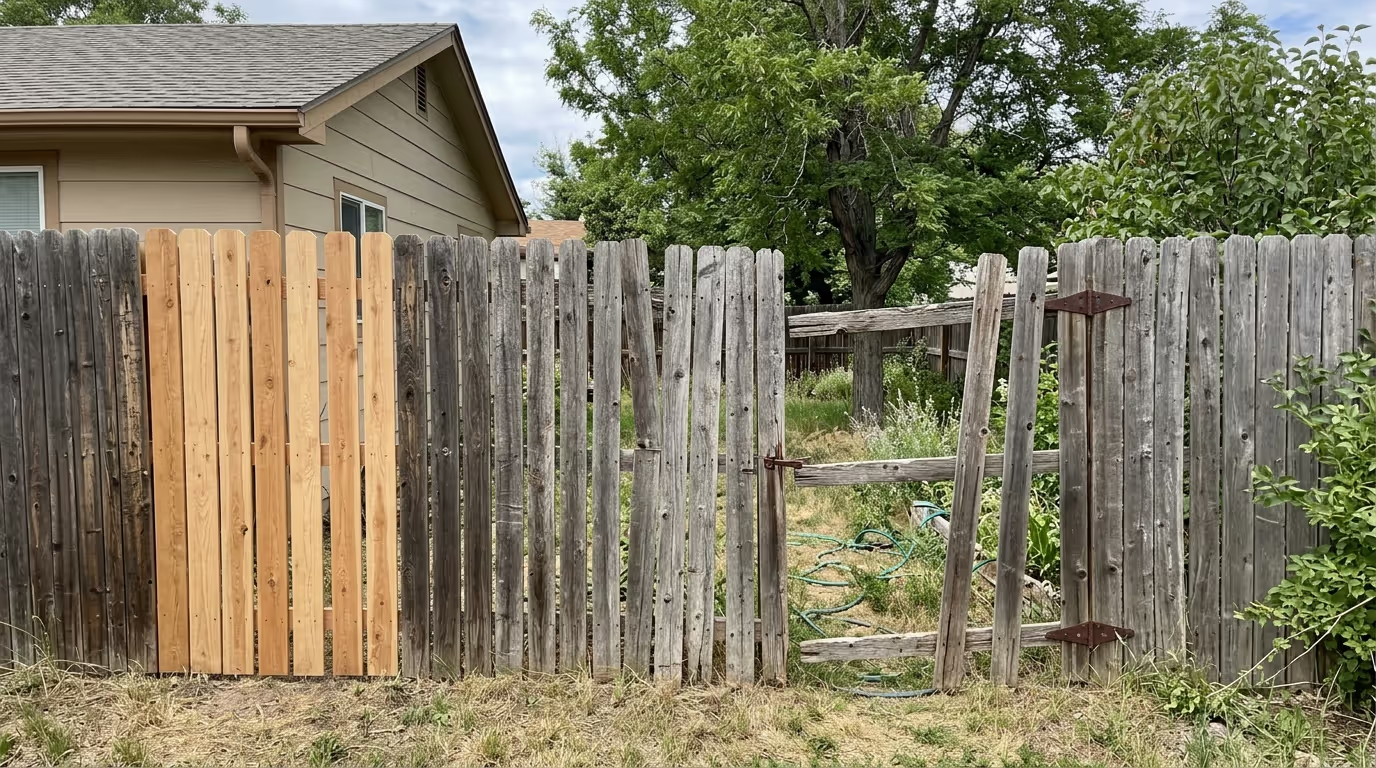
Repair is often the right choice when the problem is limited, the main structure is still solid, and the fence still does the job you need it to do. A few examples are common. One or two boards may be damaged. A gate latch may need adjustment. A small section may have taken a hit and need targeted work. Hardware may need replacement. These kinds of issues do not always point to a fence that has reached the end of its life.
Repair also makes sense when the fence is still a good fit for your home and your goals. If you still like the material, the level of privacy, the general look, and the way the yard works, then extending the life of the fence with the right repair can be a smart move.
The important part is that the repair should actually solve the issue, not just cover it up for a few more months. If the fence still feels dependable after the repair and the problem is truly isolated, that can be money well spent.
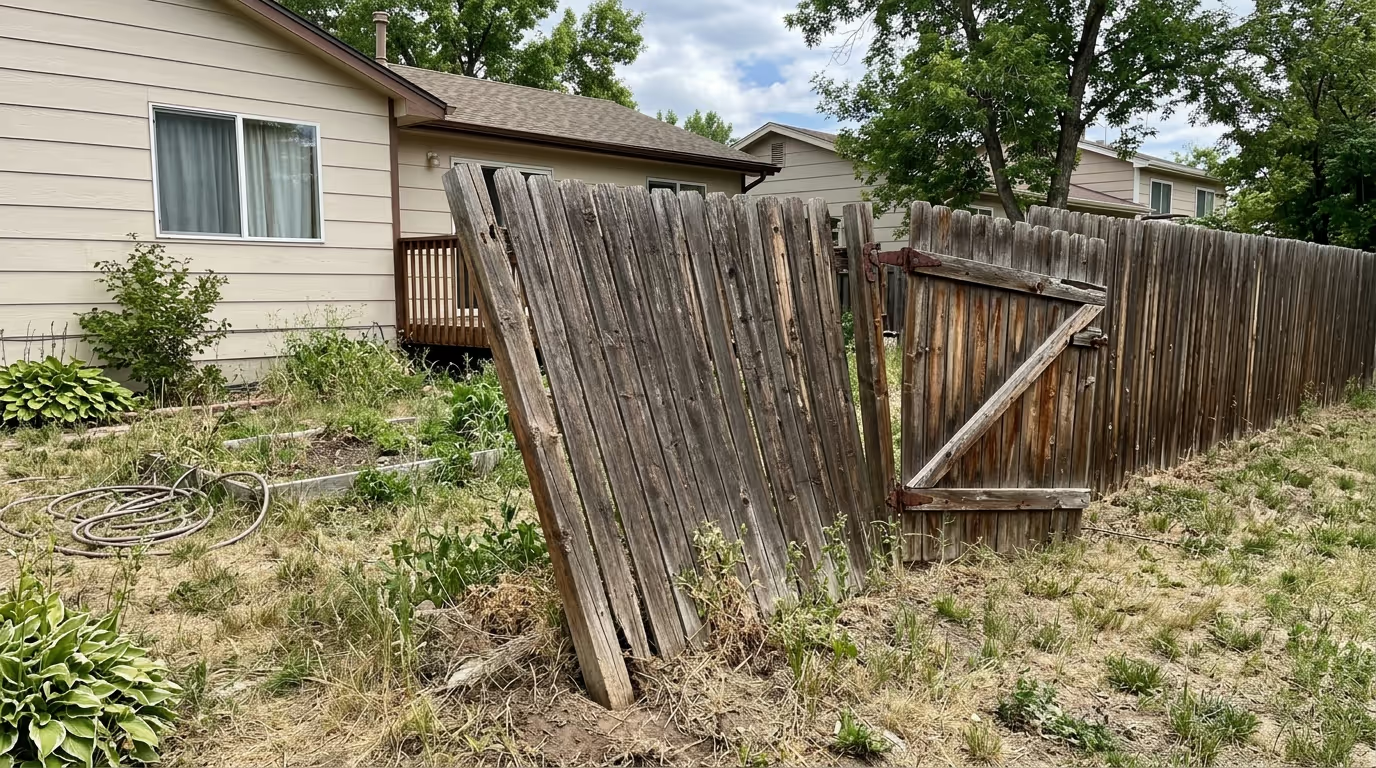
Replacement becomes the better option when the fence is wearing out in several places, when structural weakness is starting to spread, or when repairs have become too frequent to feel worth it. A fence that leans in more than one section, has multiple failing posts, has a gate that never stays aligned, or keeps asking for new fixes is often telling you the same thing: the full system is aging out.
This is especially true when the fence no longer gives you confidence. If you are constantly wondering what will fail next, or if the fence feels weak every time you open the gate, you are no longer dealing with a simple repair situation. You are managing decline.
Fence Experts talks a lot about stronger posts, reinforced gates, premium fasteners, and avoiding builder-grade shortcuts. That is helpful context here because once the deeper parts of the fence stop performing, replacement often makes more sense than continuing to patch an older system that was never built to last the way it should have been.
A single issue is one thing. A pattern is another. If your fence has one damaged section after a storm, repair may be the clear answer. If you are seeing leaning sections, cracked or warped boards, a dragging gate, visible age, and repeated maintenance issues all at the same time, that usually points toward replacement.
Try not to judge the fence only by the newest problem. Step back and look at the whole picture. Are multiple areas aging at once? Are you noticing new issues every season? Are the repairs happening closer together now than they used to? That pattern matters. It often tells you more than any single broken piece.
Homeowners often ask whether there is a certain age when a fence should always be replaced. In practice, it is not that simple. Some fences age better than others because they were built with stronger standards from the start. Others wear out faster because shortcuts were taken or lower-quality materials were used.
So age should not be treated as the only deciding factor. It should be treated as context. If a fence is older and still feels solid, well-aligned, and dependable, repair can still make sense. If a fence is older and also showing widespread wear, weak structure, and repeated failure points, age becomes part of the reason replacement is the more practical path.
Think of age as one signal, not the whole answer.
Sometimes the real issue is not only condition. It is fit. The fence may still be standing, though it may no longer match what you want from the yard now. You may want more privacy than it gives. You may want less upkeep than it requires. You may want a cleaner, more updated look around the home. You may want the fence to feel more secure or more complete than it does today.
When that happens, replacement can make sense even before the old fence is fully failing. A homeowner who keeps repairing a fence that no longer fits the property or lifestyle may end up spending money just to postpone a better long-term solution.
For example, someone with an aging fence may decide that replacement with a vinyl fence or composite fence makes more sense if lower upkeep is now a top priority. Another homeowner may decide a privacy fence is the better fit if the old layout feels too open. Repair is about preserving what still works. Replacement can also be about choosing something better for the next stage of living in the home.
It is completely reasonable to start this decision with budget. Repair usually looks easier at first because the number on the estimate is smaller. Sometimes that is the right call. Sometimes it only feels cheaper because it delays the larger choice rather than solving it.
The better question is not only “Which costs less today?” It is “Which gives me better value from this point forward?” If one repair will keep the fence working well for a meaningful amount of time, that may be the right investment. If repeated repairs are only buying short-term relief while the fence keeps getting weaker, replacement often gives better long-term value.
Fence Experts positions the brand around honesty, transparency, and no hidden fees. That kind of approach matters in repair-versus-replace conversations. Homeowners need honest guidance, not pressure in either direction. If you want a better sense of that approach, the About Us page gives helpful background.
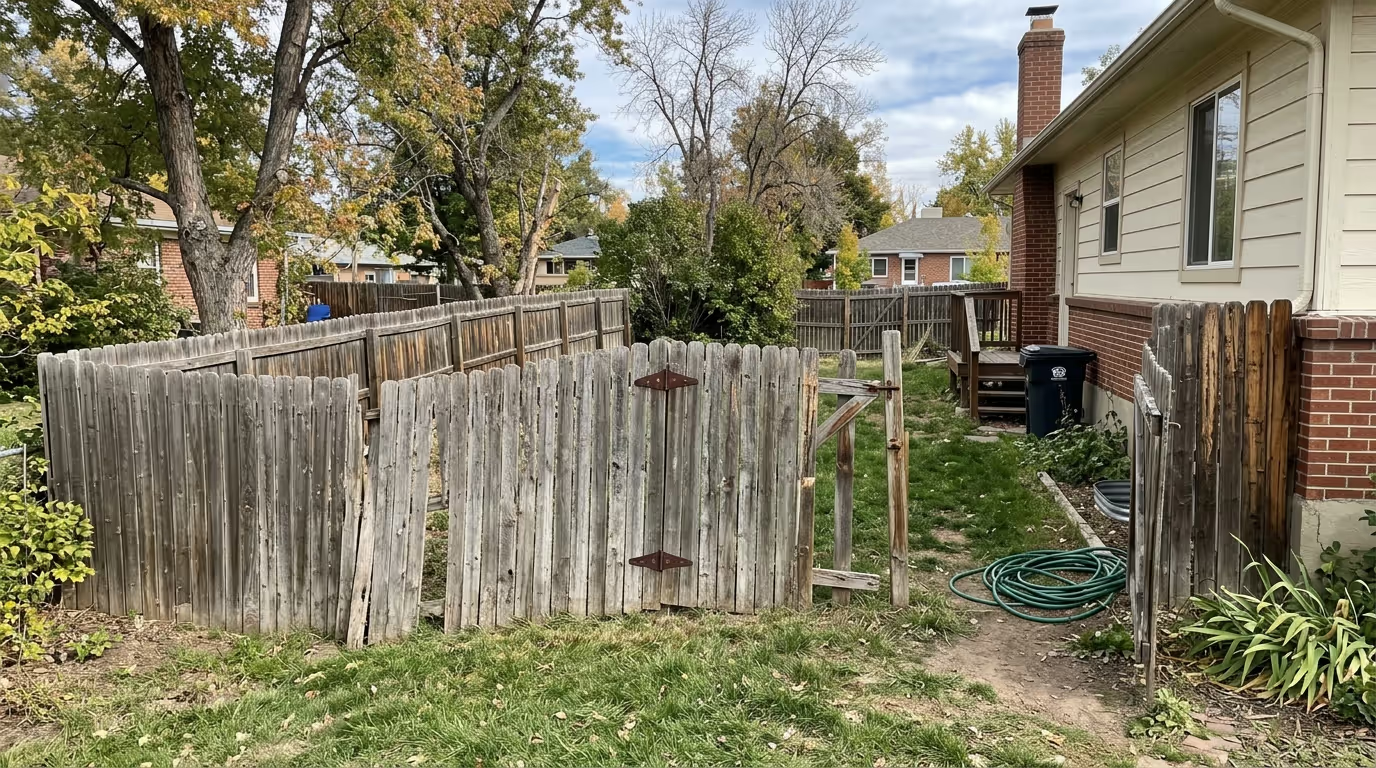
Gates deserve special attention in this decision because they often show the true condition of the fence. A gate that drags, sags, or stops latching properly can be a quick hardware fix. It can also be a sign that the surrounding structure is moving or weakening.
If the gate issue is isolated and the rest of the fence feels stable, repair is often worth trying. If the gate has already been adjusted more than once, or if the posts and surrounding sections seem to be part of the problem, replacement may be the better answer.
This is one reason structurally reinforced gates are part of the Fence Experts value story. Gates take daily stress, and weak gate construction tends to show up quickly.
This is a simple test, though it is often the most useful one. Does the fence still feel trustworthy? Not perfect. Not brand new. Just trustworthy.
When you open the gate, does it feel solid? When you look at the fence line, does it look dependable? When the weather changes, do you feel confident in the structure, or do you worry that another section may shift or loosen? Trust matters because a fence is something you live with every day. If it no longer feels stable, private, or secure in the way you need, that usually means the decision has already started to make itself.
If you are still unsure, ask yourself these questions:
If most of your answers point to isolated damage and a solid overall structure, repair may be enough. If your answers point to repeated issues, weak support, and a fence that no longer meets your needs, replacement is often the smarter move.
In many cases, the biggest regret is not replacing too early. It is waiting too long. Homeowners sometimes spend more time and money patching a fence that has already made it clear it is wearing out. That can create more frustration, more maintenance, and more uncertainty than simply moving forward with a full replacement.
On the other hand, replacing a fence that still has strong structure and only needs limited work can also be unnecessary. That is why the best decision is usually the balanced one, not the fastest one. Look at the full condition, the long-term value, and the role the fence plays in your daily life.
Repair and replacement both have their place. Repair is the better choice when the issue is limited and the fence still has good bones. Replacement is the better choice when the fence is weakening across multiple areas, no longer feels dependable, or no longer fits your needs.
The goal is not to automatically choose the cheaper option or the bigger option. The goal is to make the decision that gives your home more stability, more function, and less stress going forward. For many Denver area homeowners, that means taking an honest look at the fence as a whole and deciding whether it still has real life left in it.
When you do that, the answer usually becomes much clearer. If replacement starts making more sense, you can compare options across our services, including steel fence, chain link fence, and other styles that may fit your home better now than what you have today.